Children and sitting position
by Anne | Jan 27, 2020 | Children
Throughout life, our spine is extremely stressed. The spine is composed of vertebrae, muscles and discs that separate the vertebrae and act as shock absorbers. Excessive stress such as frequent and repetitive movements, carrying loads, overly intense sports, or even prolonged sitting position, ... can cause wear and degeneration of our spine, and cause most lower back pain.
From a physiological point of view, the nucleus of intervertebral discs is composed of 90% water, hence its shock-absorbing properties. The only non-vascularized tissue, the nucleus deflates when compressed. It only reinflates by pressure reduction (osmosis) when we are lying down. Like in adults, back pain is increasingly common in children and adolescents. Specialists estimate that, depending on age, 20 to 50% of children between 10 and 15 years old have back pain.
During their schooling, a student spends approximately 6.5 hours per day at school, in sitting position.
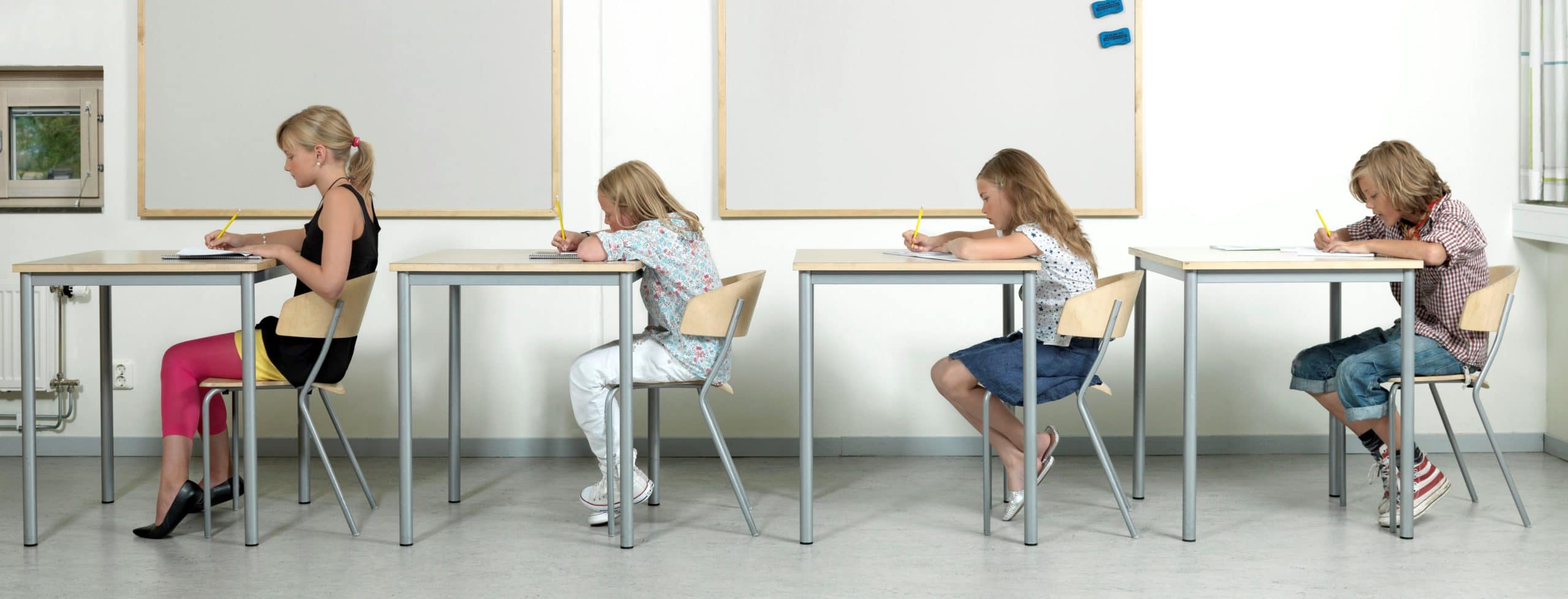
Unfortunately, school furniture is not adapted to each child. The size of children and adolescents varies greatly at each age, hence the difficulty of providing correct furniture adapted to each child in schools. The horizontal work surface also forces the child to lower their head and bend over to work.
Prolonged sitting position at school damages our children's backs... from age 6.
The consequences are mechanical and neurological in nature.
Mechanical consequences
Abnormal stress on the child's and adolescent's spine during the sensitive period of their growth influences their back's future and promotes lower back pain in adulthood. The child's trunk muscles are not yet sufficiently developed and powerful to support without great effort maintaining sitting position for hours. Their attention in class decreases because it is then more directed towards this intense muscular effort imposed on them, causing distraction. A well-adjusted seat will help them by reducing the muscular constraints and mental effort necessary to sit for a long time. The child will fidget less in their chair. By moving, children often only seek to compensate for muscular tensions.
Neurological consequences
In the child in class, there are two types of behaviors in response to the constraints of prolonged sitting position: the "well-behaved" child who doesn't move but ends up slumping in their seat; the "restless" child who keeps moving, is distracted and unfocused. Between 6 and 12 years old, the child is in full motor development. They still need to refine their body schema. Their brain uses tactile, proprioceptive, vestibular and visual integration mechanisms that lead to either a muscular response or relaxation.
Why offer a cushion to your children?
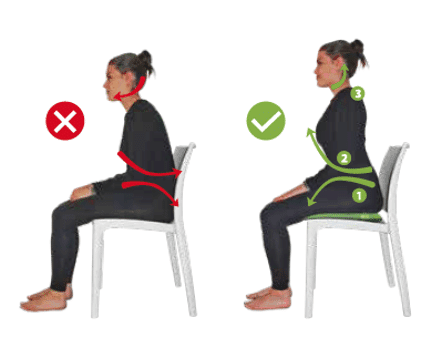
The NOA cushion helps maintain the three natural curves of the spine in sitting position (see right photo) and dynamize sitting. Spontaneously, when sitting, the pelvis tends to tilt backward (see left photo). The cushion facilitates repositioning the pelvis forward (see right photo). This correct and natural posture is essential for maintaining attention, alertness and listening and to promote task perseverance. Indeed, repositioning the head above the shoulders promotes good brain vascularization, beneficial for good concentration and better learning.
Furthermore, seating the child on a dynamic sitting cushion will generate imperceptible movements of the pelvis and back muscles that will allow them to grow by strengthening the spinal erector muscles and avoid back pain caused by prolonged sitting position.
Think about preventing the harmful effects of sitting position in your children
by seating them on a NOA cushion, at school as at home.